How To Write Product Copy That Sells
If you’ve got a great food and drink product, you’ll need great words to do it justice. Strong product copy is the start of your conversation with customers – a perfect opportunity to flex your brand voice and build a connection. Yet so much product copy – on packaging, on websites, on shelf – is underwhelming and reads like it was an afterthought. Please, don’t do that.
Some people think food product copy is easy (hence all the clichés!), while some find it terrifying, but as someone who has specialised in it for over 25 years, here’s what actually goes into writing copy that gets products picked up and placed in baskets. Whether you’re launching something new or looking to breathe life into an existing range, let me help you demystify the process.
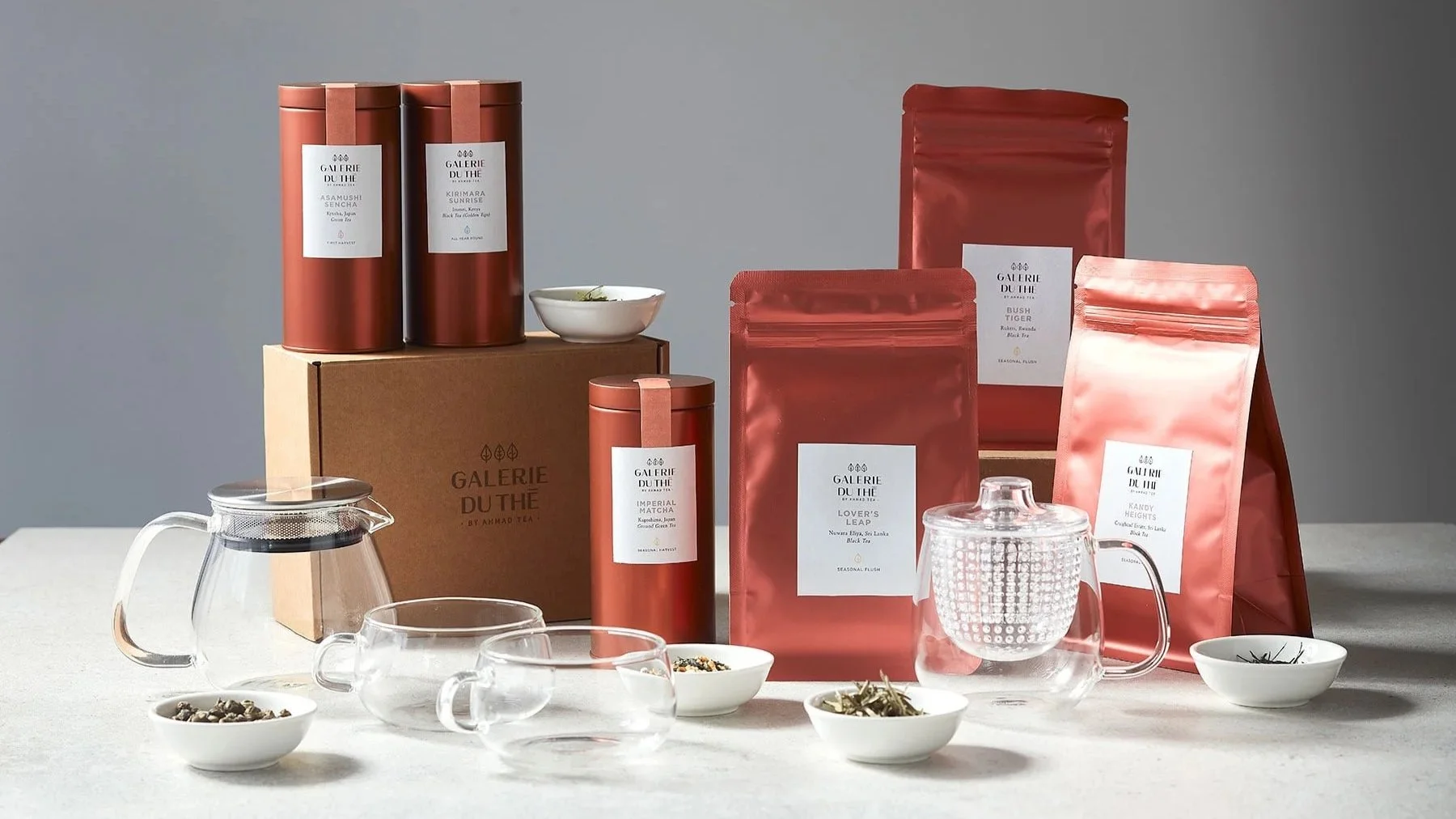
Even the most beautiful packaging needs copy that earns its place on the shelf. Luxury tea packs from Galerie du Thé.
1. Know thyself
Before writing a word, be sure of what your brand stands for. I’m not talking about the worthy (and wordy) mission statement (that nobody needs), I’m talking about that one thing that sets you apart from the pack, your point of difference that inspired all this in the first place, the thing that made you want to be different, to be better, be bold. Be ruthlessly honest here, because if you can’t say it in a sentence, your copy won’t be able to either.
2. Pick your moments
Don’t expect too much from shoppers. Most people won’t read every word. However, if the copy’s compelling, many will. So write in a way that makes the best of each scenario. For the hurried parent, zooming down supermarket aisles in a rush, give short punchy copy that helps and elevates. For those time-rich Ocado-browsers who want to engage, make the words rewarding – through texture, story, reasons to fall for you. Good product copy isn't written for one reader, it’s layered for an audience.
3. Find your voice
If you met your brand at a dinner party, would you remember the conversation? When it comes to tone of voice, you need one that is yours, not some vanilla-hued simulacrum of other brands you admire. Be distinct, talk with personality, stand for something (or fall for anything, as the saying goes). Confident or self-deprecating? Playful or precise? Once you know how your brand speaks, every line gets easier to write (and becomes easier to spot when it's wrong.
4. Location, location, location
In food and drink retail, copy is never read in isolation. Your product will sit next to a host of competitors on the shelf, all vying for the same nano-seconds of shoppers’ attention. On a search page, you're one among dozens, all promising more or less the same thing. Look sideways before you write a word – what are you actually up against, and what are they saying that you don't need to repeat? The job isn't just to describe your product well, it's to be the obvious choice among the mêlée.
5. Lead with your difference
You have to stand out, which means being known for something. You can’t big up every feature, every element that you’re proud of. Instead, you need to focus on the thing that means the most to the person who’s deciding whether to try your product. Say this first, loudest, then let everything else support it.
6. Don’t mess with regulations
Get regulations right from the outset. It can cost you time, money and insufferable hassle to fix. Health claims, allergen information, alcohol marketing rules, the legal definitions of words like 'natural' and 'organic' – get them wrong and the smartest copy in the world won't save you from a trading standards letter. Compliance isn't the boring bit, it's the foundation.
7. Write for the appetite
Listing ingredients isn’t the same as making someone’s mouth water. Provenance doesn’t make anyone salivate, it’s just detail. The best food and drink copywriting creates desire, makes people crave your product. It’s sensory. Fire the imagination, whet the appetite and make your product compelling – whether the shopper is holding it in their hand or browsing online. Use words to set the senses ablaze.
8. The price-tone mismatch
Truth starts with expectation. Food and drink copy is often at its brand-building best when it underpromises and the product overdelivers. Or to put it crudely: luxury whispers and value shouts. Everything in between needs judgement. A £40 chocolate bar and a £2 one are different propositions. Both can tell the truth, but they shouldn't sound the same doing it.
9. Read it out loud
If it doesn't sound right coming out of your mouth, it won't read right either. This is the fastest, simplest edit tool you have – and almost nobody uses it. Read your copy out loud and if it doesn’t sound natural, like it’s part of a conversation, rewrite it and try again.
10. Know the limits of AI
You can absolutely use AI to write your product copy. It'll sound fine. It might even sound quite good. But don’t forget it's never tasted your product (or any product – it doesn’t have tastebuds, hunger or desire). It’s also never met your customer, never stood in your kitchen, your vineyard, your factory, and understood why you started this in the first place.
AI doesn't know your shelf. It doesn't know your regulations. It doesn't know your one true difference – because that comes from genuinely knowing a brand, not scraping a thousand others that sound similar.
Well, if you've read this far, you realise there's more to good product copy than you expected. And that's the point. Get it right and your product earns its place on the shelf. Get it wrong, and it will more than likely go unnoticed.
If you'd rather hand it to someone who's spent 25 years doing exactly this, let's talk.