The Psychology of Wine Label Copy: What Makes Shoppers Choose Your Bottle?
You're standing in the wine aisle gazing at the bottles. In front of you: a cacophonous wall of labels, price points, grape varieties, producers, styles… You've got about eight seconds. How do you choose?
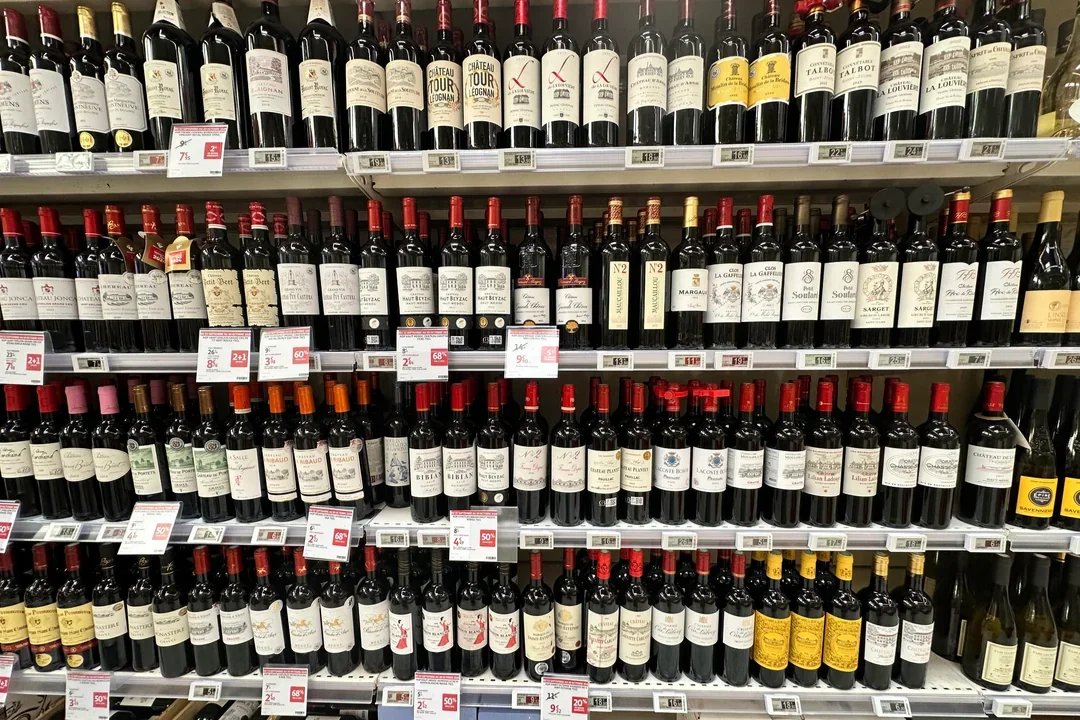
Eight seconds. Eighty bottles. How does anyone choose?
Most wine shoppers can't explain how they make their purchasing decisions (I know because I've asked many of them). They say "the label caught my eye" or "it just looked right." But there's far more going on beneath the surface – and understanding this is the key difference between wine copy that sells and wine copy that sits.
How do I know? Because I spent years researching this exact question for M&S – looking at wine labels both as a copywriter and through the psychology of label design.
THE EYES HAVE IT
Researching M&S wine labels – what UK wine shoppers really respond to
While working with Marks & Spencer's Wine, Beers & Spirits team, not only did I write hundreds of wine back labels, I also went on to help redesign them, looking at how the pertinent information could be better presented and tailored for the specific audience.
This led to conducting an in-depth research project on the psychology of front wine label design. The aim of this was create guidelines for M&S's in-house winemakers, to help them better brief designers and create the very best presentation for each new wine.
My research examined every aspect of wine packaging and label design – from bottle shapes to fonts, label colours to capsules. I also studied how UK shoppers make their purchasing decisions (not how the industry assumes they do).
Some findings were extraordinary, some counterintuitive. I learnt just how important visual information is and how most purchasing decisions happen at an unconscious level. Take colour, for instance. Warm, rich tones on a label make shoppers perceive a red wine as fuller-bodied and more complex – before they've tasted a drop.
I also discovered which words are appetite-whetting, and which are off-putting. How certain words trigger instant credibility, while others can raise suspicion or a negative reaction. Technical language can alienate casual buyers, but reassures enthusiasts – so knowing which audience you're writing for is vital.
THE THREE TYPES OF WINE SHOPPER
You're not marketing to ‘wine drinkers’ – you're talking to one of three very different customer types
My research was solely focused on shoppers in M&S wine aisles, but of course I read widely on wine shopper types to inform my approach. Research into wine consumer behaviour consistently identifies three broad shopper profiles in the UK. Understanding which one you're targeting changes everything about how you communicate a wine.
The Enthusiast knows their regions, reads the back label properly and wants to see provenance and technical detail. Enthusiasts want to feel educated, not patronised. Use the wrong terminology, oversimplify the winemaking process or reach for a lazy flavour cliché and they'll reach for another bottle. They're also the most likely to call out inauthenticity – so if you claim complexity, you'd better deliver it in the glass.
The Confident Casual drinks wine regularly and has genuine preferences, but doesn't geek out. They know what they like without necessarily knowing why. They want to feel they've made a smart, considered choice – not a random one. Personality and story work brilliantly here. A label that feels like it has a point of view, a place, a reason for being, gives them the confidence to pick it up. They're the shopper most likely to become a loyal repeat buyer when the copy connects.
The Anxious Buyer finds wine genuinely intimidating. They buy wine as a gift, for a dinner party, to impress. They don't want to get it wrong. They're scanning labels for reassurance rather than information. Complex tasting notes, obscure appellations and technical language are barriers, not selling points. Simple, warm, accessible copy that tells them clearly what the wine tastes like and what to eat it with can be the difference between a sale and a bottle left on the shelf.
My research for M&S chimed with the above. Although I was discussing design AND copy, it was clear that the language of wine retail and the language of wine shoppers are often in different dialects. Indeed, research from Cardiff Metropolitan University studying UK wine consumers specifically found a significant gulf between how the wine trade talks about wine and how ordinary shoppers actually experience it – particularly among newer or less confident buyers. That gap is a copywriting problem as much as anything else.
The mistake most wine labels make? They try to speak to all three shopper types at once. This is a big mistake as by doing this, you end up speaking to none of them. A label that hedges its bets with vague, crowd-pleasing language loses the Enthusiast (too shallow), bores the Confident Casual (no personality) and still confuses the Anxious Buyer (who's not reassuring enough).
Great wine copy makes a choice. It knows its shopper, speaks their language, and trusts that the right person will respond.
THE BAD, THE BORING, AND THE UGLY
Those adjectives that are killing your sales
Expert or beginner, we all know what good wine copy should do. But let's look at what it actually does – on shelves, on websites, and on the labels of wines you've probably drunk without ever really reading.
The Bad
Bad wine copy doesn't just fail to sell – it actively misleads or puts the reader off. "Hand-picked by local artisans" sounds charming (albeit twee and a bit silly), but when the wine is clearly from a huge producer and almost certainly made industrially from harvest to bottling, please don't. Shoppers who feel misled don't just put the bottle back, they don't come back.
Then there's the technical dump, copy that's accurate but written entirely for the wrong audience. "Dried cherries, cedar, sandalwood, tar, treacle tart, cinnamon and vanilla. Medium body, fine-grained and very silky tannins, bright and transparent acidity and a long, spicy finish." This might be a good tasting note – for a wine competition judge or a Master of Wine – but it belongs in a notebook, not on a label. Standing in a supermarket aisle with seconds to decide, most shoppers will read the first three words and move on. The Enthusiast might appreciate it, but everyone else is lost.
The Boring
This is where most wine copy lives – and it's arguably the bigger problem, because at least bad copy is memorable.
"A delightful, fruity wine that is perfect for any occasion."
"A bright and crisp white with hints of citrus and a pleasant finish."
"This versatile red shows great structure and complexity."
Read those three sentences again. Now try to picture which wine any of them described. You can't – because they could describe almost any wine ever made. "Good with chicken and fish." "A blend of traditional techniques and modern approaches." Blah blah blah. This is the tombola of tired adjectives in full spin: tossing out phrases that have been used so many times, on so many labels, they've stopped meaning anything at all.
The Confident Casual wants personality and a reason to choose this bottle. The Anxious Buyer wants reassurance. The Enthusiast wants a mirror to their own knowledge. They all get met with copy that could have been generated by an algorithm – and increasingly, is.
The Ugly
At the opposite end of the spectrum sits copy that tries so hard it disappears up its own barrel.
"This wine captures the soul of the vineyard, whispering secrets of sun-drenched granite into your palate before embarking on a passionate dance of tannins."
"Notes of wet slate, violet petal, and the forgotten memory of a Parisian summer."
"A moody, brooding Cabernet that demands respect and pairs well with philosophical existentialism."
These are real. Genuinely. Someone wrote them, someone approved them, and somewhere, somehow, they ended up on a label or a website. The intention was poetry. The result is parody. Overwrought, self-important copy doesn't just confuse the Anxious Buyer, it makes the Enthusiast roll their eyes and the Confident Casual reach for something that doesn't take itself quite so seriously.
Wine is extraordinary. It doesn't need purple prose to make it interesting. It needs copy that understands it – and understands the person picking it up.
WHAT GOOD WINE COPY ACTUALLY DOES
Four things every great wine label achieves
Bad and boring copy is easy to spot once you know what you're looking for. But what does good wine copy actually look like in practice? Here are some real-world examples that show the difference between labels that sell and labels that sit.
It knows its audience
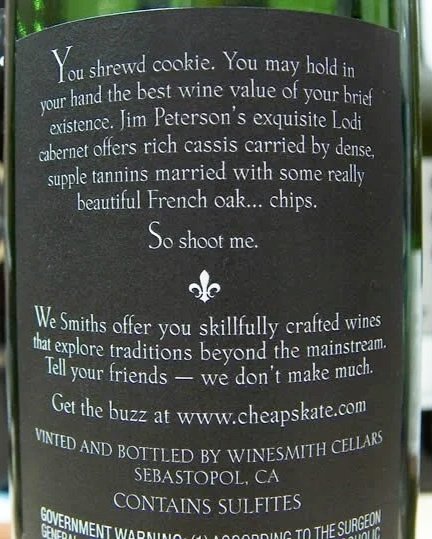
"So shoot me." Three words that do more for brand personality than most labels manage in three paragraphs.
Take this back label from Cheapskate Cabernet, a Californian disruptor that wears its positioning proudly:
"You shrewd cookie. You may hold in your hand the best value wine of your brief existence. Jim Peterson's exquisite Lodi cabernet offers rich cassis carried by dense, supple tannins married with some really beautiful French oak... chips. So shoot me."
This is the Confident Casual's dream label. It's funny, self-aware, honest about its limitations (oak chips rather than barrel aged, and not hiding it), and speaks directly to a shopper who wants to feel clever for finding good value. "So shoot me" does more for brand personality in three words than most labels achieve in three paragraphs. It could possibly annoy the Enthusiast and unsettle the Anxious Buyer, but it doesn't care, because it knows exactly who it's talking to – and it's talking to them brilliantly.
Uses simplicity without being simplistic
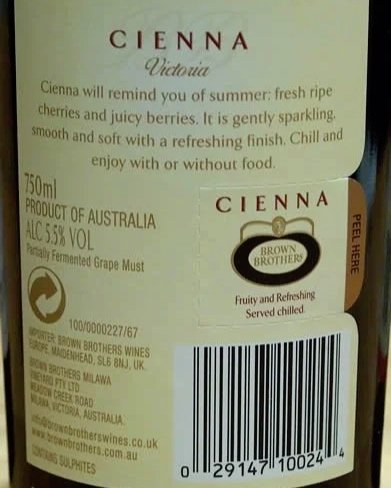
Warm, accessible, reassuring. Textbook Anxious Buyer copy.
Australia's Brown Brothers take a completely different approach on their Cienna wine label:
"Cienna will remind you of summer: fresh ripe cherries and juicy berries. It is gently sparkling, smooth and soft with a refreshing finish. Chill and enjoy with or without food."
No jargon. No technical detail. No obscure flavour descriptors. Just a sensory picture and setting that tells you exactly what the wine tastes like, and what to do with it. This is textbook Anxious Buyer copy: warm, accessible, reassuring. "Will remind you of summer" creates an immediate emotional connection without trying too hard. And "chill and enjoy with or without food" removes the last barrier: you can't get this wrong.
Add provenance to build credibility
This is from Casa Girelli's Sicilian Nero d'Avola / Syrah back label:
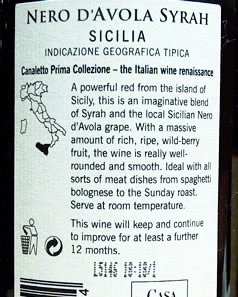
A map does half the work. The copy does the rest.
"A powerful red from the island of Sicily, this is an imaginative blend of Syrah and the local Sicilian Nero d'Avola grape. With a massive amount of rich, ripe, wild-berry fruit, the wine is really well-rounded and smooth."
The label does something simple but effective – it adds a map of Italy with Sicily clearly marked. Immediately, it makes shoppers who might have hesitated over an unfamiliar region feel oriented. The copy does the rest. It explains the blend, grounds the wine in a place and gives you clear flavour expectations. It's functional rather than poetic, but it earns its space on the label. The Confident Casual gets enough context to feel informed. The Anxious Buyer gets enough reassurance to feel safe.
Create desire, not just descriptions
This is the hardest thing to do well – and is the thing that separates merely competent wine copy from copy that actually sells. Here's how I approached a Mendoza Malbec for one of my clients:
"This inky Mendoza Malbec is all about fruit purity – jammy blackberries, sun-dried plums, even a whiff of purple violets. It's all backed by graphite minerality and grippy tannins that make the perfect partner for charred steaks."
Specific. Sensory. It creates a moment: you can picture the glass, the plate, the occasion. The Enthusiast gets technical reassurance (graphite minerality, tannin structure), the Confident Casual gets a vivid flavour picture. Even the Anxious Buyer gets a clear food pairing that removes the guesswork.
Compare that to what AI would generate for the same wine: "This bold Malbec offers rich flavours of dark fruit and smooth tannins." Accurate, perhaps. Forgettable, certainly.
And what not to do
For contrast, consider this Tesco Marlborough Pinot Noir, which takes a different approach entirely – explaining everything from serving temperature, storage advice and units of alcohol per glass.
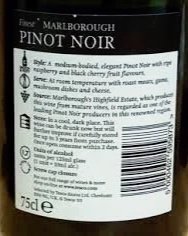
Every box ticked. Not a single moment of desire created.
"A medium-bodied, elegant Pinot Noir with ripe raspberry and black cherry fruit flavours. Serve at room temperature with roast meats, game, mushroom dishes and cheese. Marlborough's Highfield Estate, which produces this wine from mature vines, is regarded as one of the leading Pinot Noir producers in this renowned region. Store in a cool, dark place. This wine can be drunk now but will further improve if carefully stored for up to 3 years from purchase. Once open consume within 2 days. Units of alcohol: 11 per 125ml glass (1 unit = 10ml alc). Screw cap closure"
Phew. Every box ticked. Not a single moment of desire created. The Anxious Buyer might appreciate the thoroughness, but nobody is reaching for this bottle because the copy made them want it.
Great wine copy doesn't just describe a wine. It puts you in the moment of drinking it, reassures you it's the right choice, and makes you feel good about reaching for it. Whether that's through wit, warmth, provenance or pure sensory evocation, the best labels earn their place on the bottle.
WHAT WINE COPYWRITERS KNOW THAT MOST DON'T
The rules that shape every word on a label
The Tesco label above isn't badly written, it's just written by committee, with compliance sitting in the driving seat and creativity in the boot. Units of alcohol, serving suggestions, storage instructions, source information – all present and correct. All a bit joyless.
Here's the thing: the legal requirements don't have to kill the copy. They just have to be there.
Wine label copy in the UK operates within strict guidelines. Alcohol content, allergen information, country of origin – these are non-negotiables. Health claims are heavily restricted. The term "organic" requires certification. "Natural" is largely unregulated but increasingly scrutinised. Alcohol marketing codes govern what you can and can't imply about a wine's effects.
A good wine copywriter doesn't fight these requirements – we work around them, finding the space between the legal obligations to tell a story that actually sells the wine.
AI doesn't know any of this. Neither does a generalist copywriter who's never worked in the category. The result is either copy that falls foul of trading standards, or copy so cautious it says nothing at all.
The Tesco label gets the compliance right. It just forgot to make anyone want the wine.
Your Wine Label Is a Salesperson Working 24 Hours a Day
In a crowded wine aisle, label copy is often the deciding factor between a bottle that gets put in a basket up and one that doesn't. The label design decides which bottle gets picked up, but it's the copy that seals (or sours) the deal. It's rarely the wine itself.
The best wine label copy does something remarkable in a very small space. It identifies the shopper, speaks their language, then creates desire (and removes doubt). That requires understanding of the psychology of wine buying, the craft of copywriting and the product itself. Not one of those things. All three.
I've spent over 20 years writing wine copy – back labels, tasting notes, web copy and content for M&S's Wine Club, and brand copy for artisan wine and drinks businesses across the world. Before that, I worked in the wine trade and trained as a chef. When I write about wine, I'm drawing on all of it.
If your labels are closer to the Tesco Pinot Noir than the Cheapskate Cabernet, i.e. functional, compliant, forgettable, let's talk about what better copy could do for your sales.
Get in touch at williamthomas.uk
Frequently Asked Questions
Q: What makes a good wine back label?
A: A good back label knows its audience and speaks directly to them. It creates a sensory picture of the wine, builds confidence in the purchase decision, and does all of this within the legal requirements governing wine labelling. The best labels make you want to taste the wine before you've even opened the bottle.
Q: How is wine copywriting different from general copywriting?
A: Wine copywriting requires genuine product knowledge - understanding grape varieties, winemaking techniques, regional differences and flavour profiles - combined with an understanding of how wine shoppers actually make purchasing decisions. A generalist copywriter can write competent copy. A specialist writes copy that sells.
Q: Can AI write good wine copy?
A: AI can generate technically accurate wine descriptions by scraping existing tasting notes and recycling familiar language. What it can't do is taste the wine, understand the specific audience, navigate UK labelling regulations, or create the kind of authentic voice that builds genuine brand loyalty. It's the difference between a description and a story.
Q: How do you write wine copy for different types of shoppers?
A: The key is identifying which shopper you're primarily targeting - the knowledgeable Enthusiast, the Confident Casual, or the Anxious Buyer - and writing specifically for them. Trying to speak to all three simultaneously usually means speaking effectively to none of them. Great wine copy makes a choice.
Q: Do you only write for wine brands?
A: No - I write across the full spectrum of food and drink, from packaging and websites to marketing campaigns and brand storytelling. Wine is a specialism within a broader food and drink expertise built over 20+ years, including work for M&S, Sainsbury's, The Newt in Somerset, Westcombe Dairy and Ahmad Tea.