Don't Skip The Words! Why Great Packaging Copy Is Your Brand's Most Valuable Asset
The email arrives with a mild sense of panic. Can you help? We have a lovely new brand ready to launch. The design is done – look how beautiful! We've nurtured the packaging through many rounds of (costly) amends, the printers are standing by, and the product's in a warehouse all ready to go…
Oh, and we just need some words. By tomorrow?
It's one of the most common situations I encounter as a food and drink packaging copywriter. Copy treated as a finishing touch – something to squeeze into the gaps once the 'real' creative work is done. A box to tick before the job goes to print. Grr.
It's also one of the most expensive mistakes a food brand can make.
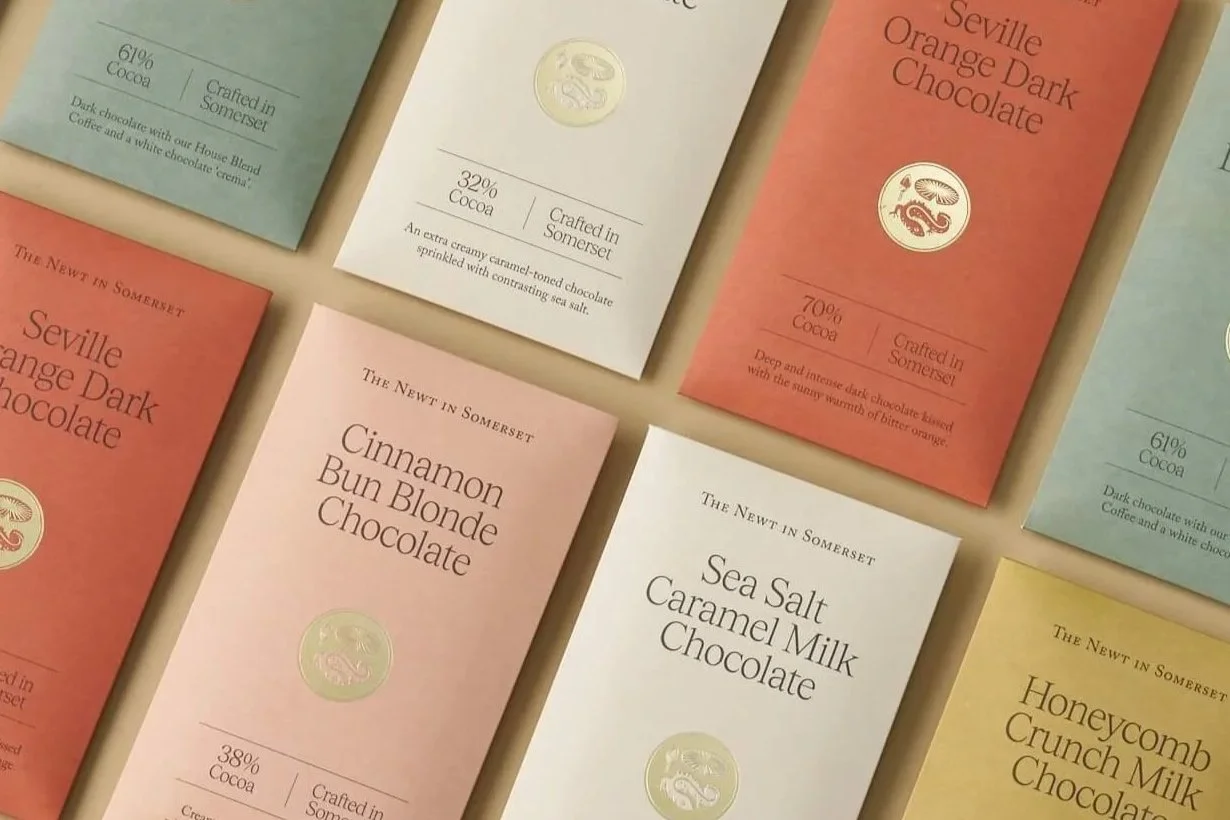
Chocolate Bar packaging for The Newt in Somerset.
The brief that arrives too late
It's not that these businesses don't care about their words. Of course they do. It's just that copy has been quietly deprioritised and devalued at every stage of the process: nudged down the to-do list while they obsess about the design side of branding.
The design team got weeks to perfect the visual identity. The structural packaging has been engineered and re-engineered. The photography lavishly executed. Even the retailer listing is confirmed. And somewhere in the final sprint to launch, someone remembers that the box/label/packs needs words on them, and perhaps a better strapline than the one ChatGPT gave the founder.
By the time the brief lands with a copywriter, the constraints are brutal. The space is fixed. The tone has been set by visuals you weren't involved in creating. The timeline is measured in days rather than weeks. And the budget – well, the budget mostly went on those three rounds of packaging amends. Grr, again.
The result is copy that does a job rather than tells a story. Competent, compliant, forgettable. Copy that fills a space rather than earns it.
And here's what makes that genuinely painful: the space on your packaging is among the most valuable advertising your brand will ever have. It's what grabs a shopper's attention. Goes home with your customer. Sits in their cupboard. Gets picked up again and again. It works for you long after the launch campaign has finished and the social posts have scrolled away.
Treating this space as an afterthought is a huge missed opportunity.
What packaging copy does
Here's what gets lost when copy is an afterthought: those words aren't just descriptions, nor are they mere information. Good packaging copy is doing many jobs at once – and doing them in a remarkably small space.
The first impression
Words and design work together to create that all-important first impression. This is the big bang of your customer relationship. Long before the product's opened the front, back and side labels of your pack are a chance to engage, charm and inform your customer – to introduce your brand and strike up a relationship.
The sales pitch
Especially on the shelf – where there's no salesperson, no website, no social feed – the pack is your chance to stand out and sell the brand experience. Here, the copy IS the pitch. In mere seconds, it needs to stop a browser and turn them into a buyer.
A matter of trust
Specific, accurate, knowledgeable copy signals that the brand knows its product and stands for something. That the people behind it care. This is where trust is formed. Vague generalities – 'crafted with care, 'made with the finest ingredients' – signal that nobody thought very hard about things. Who's going to trust that?
The flame of desire
Good pack copy doesn't just describe what something tastes like, it makes the reader want to taste it. Right now. Getting into their heads, getting their juices going, this is how you make something irresistible, essential. This is the skill, and it's the difference between copy that informs and copy that sells.
Building the brand
Every word choice is a brand decision. Casual or formal? Witty or earnest? Technical or accessible? Get it right and you set the tone for everything that follows. Get it wrong and no amount of beautiful design will save you.
When the words come first
Let me tell you about Bo.
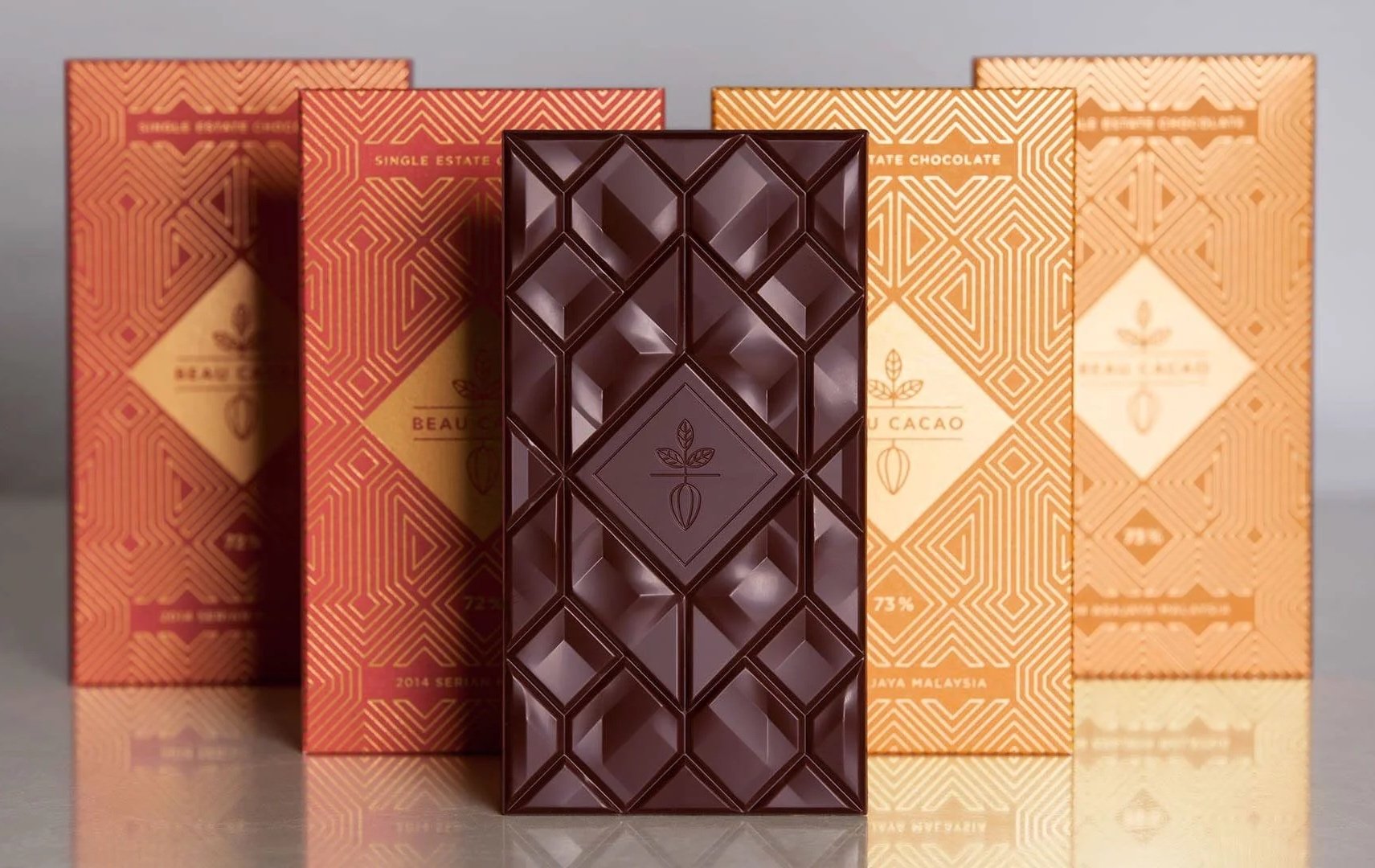
Bo San Cheung contacted me about her new chocolate brand, Beau Cacao, back in 2016. A professional (and very talented) designer herself, Bo had crafted beautiful packaging for her and her husband Thomas's equally beautiful chocolate bars.
What she needed was someone to find the words. What she didn't realise at the time was how important those words could be.
From the brief and our initial conversations, Bo and Thomas's passion to create a truly unique chocolate was clear. Looking at their blog I could see their journey – from their travels to their own homemade chocolate equipment. Inspired by my working relationship with Tom at Westcombe Dairy, I recognised the integrity that Beau Cacao was built on, the desire to build something real, special and completely without compromise. It's a very appealing trait. Then I tried the chocolate. Wow.
What I wrote for Bo and Thomas – tasting notes, brand story and a rallying strapline – had an unexpected effect. The copy gave them a new way of seeing their chocolate. The language I used to describe the flavours, the provenance, the craft behind each bar didn't just sit on the packaging, it changed how Bo thought about the design.
She went back and redesigned the packs to reflect the words.
A designer, redesigning her packaging because of the copy. Think about that for a moment.
Bo later put it better than I ever could: "Will transformed us, and without knowing it at that time, helped us structure our story. His ideas really help set a brand apart. Good copy is vital for making an impact. Don’t skip the words, invest in them!"
Coming from a designer, that's not a small thing to say. It's the acknowledgement that words aren't decoration. They're not the last layer you apply before sending to print.
Copy is part of the creative process. It helps shape the brand. Sometimes, if you're lucky, it illuminates it in ways even the designer didn't expect.
That's what happens when copy is treated as a creative partner rather than a practical necessity.
So what does good packaging copy need to do?
Pack copy needs to work hard in a very small space. The average front label gives you perhaps 10-20 words. Sometimes less. Back labels around 40-80, if you're lucky. In that space, your copy needs to establish who you are, what makes you different, why the person holding your product should care – and why they should buy it. Right now.
That means every word has to earn its keep. There's no room for filler, vague claims, generic hoo-ha that could belong to any brand on the shelf. "Crafted with care." "Only the best ingredients." "Homemade taste." These phrases don't just fail to work – they actively undermine trust. They signal that nobody thought very hard about this.
Good packaging copy is specific. It talks of provenance and process in a tangible, genuinely exciting way. It tells you something you couldn't have guessed. It uses language that belongs to this brand and no other.
Good packaging copy is sensory. It helps you taste the product before you've opened it. It creates anticipation, desire, appetite. That's a different skill to information delivery – and it's the difference between copy that sits there and copy that sells.
Good packaging copy is consistent. It sounds the same on the front panel as it does on the back label, in the ingredients description as in the serving suggestion. Every word is a brand decision, and brand decisions need to be made consciously, not squeezed in at the last minute.
And good packaging copy is honest. It doesn't over-claim or over-promise. It doesn't dress up the ordinary in fancy language. It finds the genuinely interesting thing about the product and says it clearly and well.
Invest. In. Your. Copy.
Here's the truth: most food brands underinvest in copy. Not because they don't care – but because copy is invisible until it's wrong. Nobody notices the back label until it lets them down.
The brands that get it right, that treat copy as a creative discipline rather than a last-minute necessity, build something that compounds over time. They create packaging that keeps working long after launch. A brand voice that's consistent across every touchpoint. Words that make people feel something.
The brief that arrives in a panic, three days before print, will always produce copy that does a job. It will never produce copy that builds a brand.
So next time you're deep in a packaging project – when the design is nearly done, the printer is on standby, and someone mentions the words – don't push it to the bottom of the list. Bring a specialist copywriter in early. Give them the time and the brief they need.
Don't skip the words. Invest in them.